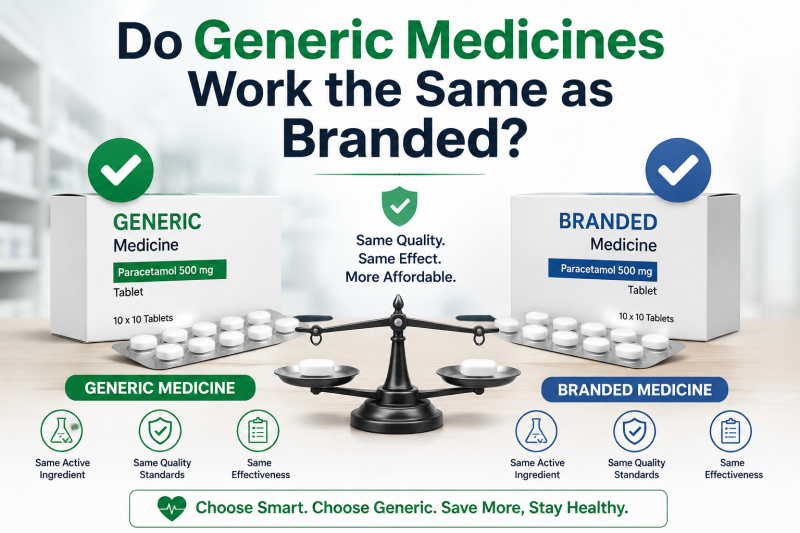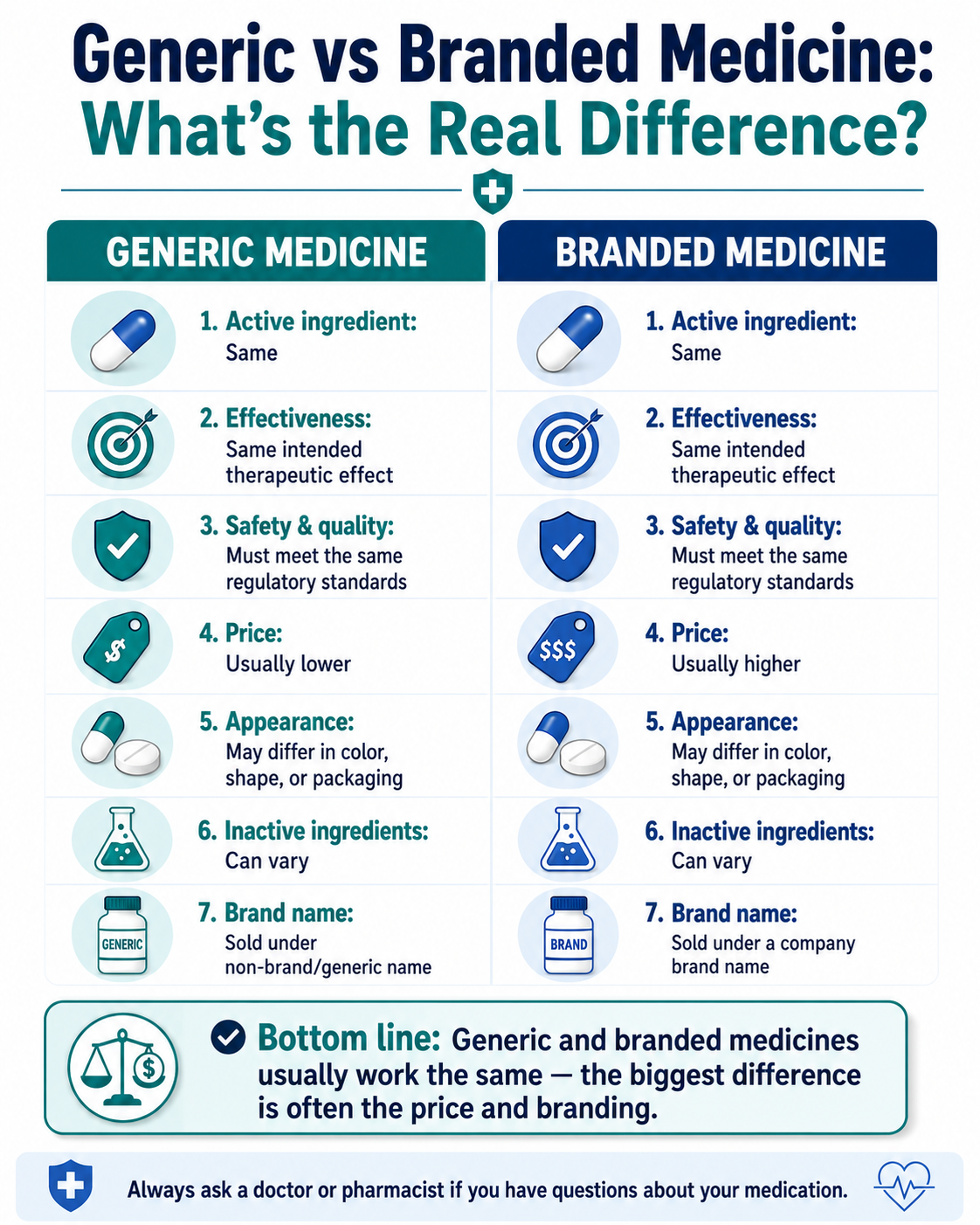
The real difference between a generic and a branded medicine is not the active ingredient — it is the price, the packaging, and the name on the strip. The molecule that treats your condition is chemically identical in both. What changes is how much you pay, who manufactures it, and what it looks like. Here is exactly what is the same, what is different, and what that means for you at the pharmacy counter.
At Scanda Enterprises in Moosapet, we compare branded and generic options for customers every day. The question "what is the difference between this branded one and the generic?" deserves a complete answer — not just "same thing, cheaper." Here it is.
What stays exactly the same
Active ingredient (salt): This is the molecule that does the work — paracetamol, metformin, atorvastatin, amlodipine. For a generic to be approved by India's drug regulator, the Central Drugs Standard Control Organisation (CDSCO), it must contain the identical active ingredient in the identical strength and dosage form as the branded version. This is non-negotiable.
Therapeutic effect: Because the active ingredient is the same, your body responds to a generic the same way it responds to the branded drug. The clinical outcome — pain relief, blood pressure control, infection clearance — is the same.
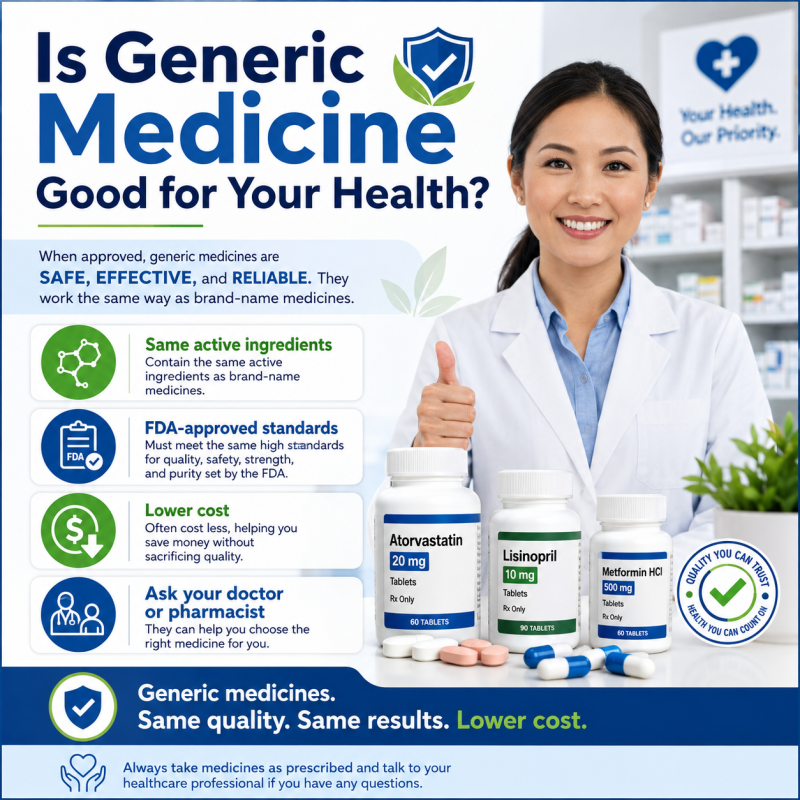
Regulatory standard: Both branded and generic medicines in India are approved and monitored by CDSCO under the Drugs and Cosmetics Act. A licensed generic is not held to a lower standard than a branded medicine.
Bioequivalence: For many medicine categories, the generic must prove bioequivalence — that it releases the active ingredient into your bloodstream at the same rate and in the same amount as the branded original. Same delivery, same effect.
What is actually different
Price: This is the biggest and most meaningful difference. Without the cost of original drug discovery, clinical trials, and large-scale marketing to recover, a generic manufacturer can sell the same molecule at 50–90% less than the branded price. For medicines taken daily over years, this difference adds up to thousands of rupees annually.
Appearance: Tablet shape, colour, size, and coating can differ between a branded and generic version. These differences come from the inactive ingredients — binders, fillers, colourants — which hold the tablet together and give it its appearance. They do not affect how the medicine works. If your tablet looks different after switching to a generic, this is why.
Manufacturer: The branded medicine comes from one company. Multiple licensed manufacturers may produce the same generic salt. In India, this competition is especially strong — dozens of companies may make the same molecule, which is one reason prices stay low.
Brand recognition: Years of prescriptions and advertising build familiarity with a brand name. That familiarity has value — but it is not pharmacology. The salt does not know what is printed on the box.
Inactive ingredients: Excipients — the non-active components — can vary. For most people this makes no difference at all. In rare cases, someone may respond differently to a specific filler or coating, but this is uncommon and not a reason to avoid generics as a category.
Side-by-side comparison
| Feature | Branded Medicine | Generic Medicine |
|---|---|---|
| Active ingredient | Original salt | Identical salt |
| Strength / dosage form | As approved | Must match exactly |
| Regulatory approval | CDSCO | CDSCO (same body) |
| Therapeutic effect | Yes | Same |
| Appearance | Brand specific | May differ |
| Inactive ingredients | Proprietary | May vary |
| Price | Higher | 50–90% lower |
| Manufacturer | One company | Multiple licensed makers |
Real shelf price comparison
Here are indicative comparisons from our own counter — the kind of difference we see every day at Scanda Enterprises, Moosapet. Exact prices vary by manufacturer and pack size:
| Medicine (salt) | Typical branded price | Typical generic price | Saving |
|---|---|---|---|
| Atorvastatin 10 mg × 10 tabs | ₹XX | ₹XX | ~XX% |
| Metformin 500 mg × 10 tabs | ₹XX | ₹XX | ~XX% |
| Amlodipine 5 mg × 10 tabs | ₹XX | ₹XX | ~XX% |
Note: Replace the ₹XX values with actual current shelf prices before publishing — real first-hand prices are an information signal no competitor can copy.
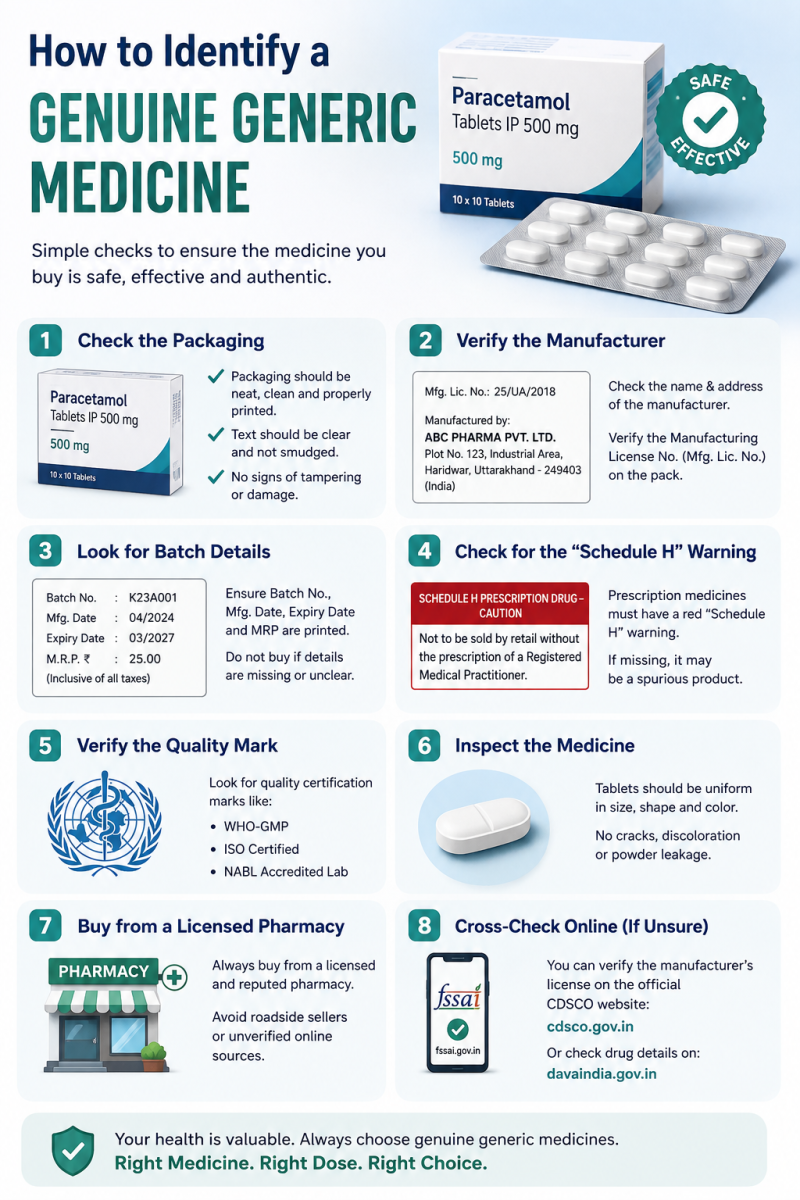
How to identify a generic medicine
On any medicine pack, look for the salt name printed prominently — this is the active ingredient. A generic will lead with the salt name (e.g. "Paracetamol 500 mg") and show the manufacturer name, batch number, manufacturing and expiry dates. A branded medicine will lead with its brand name and show the salt name in smaller print beneath. Both must display this information by law. The salt name is the one that tells you what you are actually taking.
When does the difference matter most?
For most everyday medicines — pain relief, antibiotics, antacids, vitamins, and the majority of diabetes, blood pressure, and thyroid medicines — the choice between branded and generic is primarily a financial one. The medical outcome is the same.
The difference matters more for a small group of narrow therapeutic index medicines — where the margin between an effective and a harmful dose is small. Examples include certain anti-epileptics (phenytoin, valproate), blood thinners (warfarin), and some thyroid medications (levothyroxine). For these, switching between manufacturers — even between two generics — should only happen on your doctor's advice. Once switched, stay consistent with one manufacturer.
Generic vs branded at Scanda Enterprises, Moosapet
At Scanda Enterprises, our 2,200 sq ft pharmacy in Bhavani Nagar, Moosapet stocks both branded and generic equivalents for most common prescriptions. Our registered pharmacist can show you the exact generic match for any branded medicine you bring in — same salt, same strength — and tell you the price difference on the spot.
We are open 24 hours, 7 days a week. Walk in with your prescription, or WhatsApp it to 86880 60339 and we will send you both options with current prices before you make the trip. Customers switching common chronic-disease medicines to generics typically save 40–60% on their monthly medicine bill.
Frequently asked questions
What is the difference between generic and branded medicine?
The active ingredient, strength, dosage form, and therapeutic effect are identical. The differences are price (generics cost 50–90% less), appearance (shape, colour, coating may vary), and manufacturer. Both are approved by CDSCO to the same quality standards.
Is generic medicine as good as branded medicine?
Yes. The active ingredient is chemically identical and the medicine is approved by the same regulator. For most medicines, the clinical outcome is the same. A small group of narrow therapeutic index drugs require extra care when switching — always ask your pharmacist.
How do I identify a generic medicine?
Look for the salt name printed prominently on the pack (e.g. "Paracetamol 500 mg"). A generic leads with the salt name; a branded medicine leads with its brand name. Both must display the salt, strength, manufacturer, batch number, and expiry date by law.
Why do doctors prescribe branded medicines if generics are the same?
Familiarity, long-standing habit, or specific clinical reasons. Since 2017, Indian medical guidelines encourage prescribing by salt name where feasible. You can always ask your doctor: "Is there a generic equivalent I can safely take?"
Are generic medicines from Jan Aushadhi good quality?
Yes. Jan Aushadhi medicines are quality-tested generics sold through government-approved outlets. They contain the same active ingredients as their branded equivalents at significantly lower prices.
Where can I compare branded and generic medicines in Moosapet?
Scanda Enterprises, 234/D, Bhavani Nagar, Moosapet, Hyderabad, Telangana 500018 — open 24 hours, 7 days a week. Call 86880 60339 or 080087 20077, or WhatsApp your prescription to compare options and prices.
This article is for general information and is not a substitute for medical advice. Always consult your doctor or a registered pharmacist before changing any medicine, particularly if you are managing a chronic condition or taking a narrow therapeutic index drug.